Into the Void
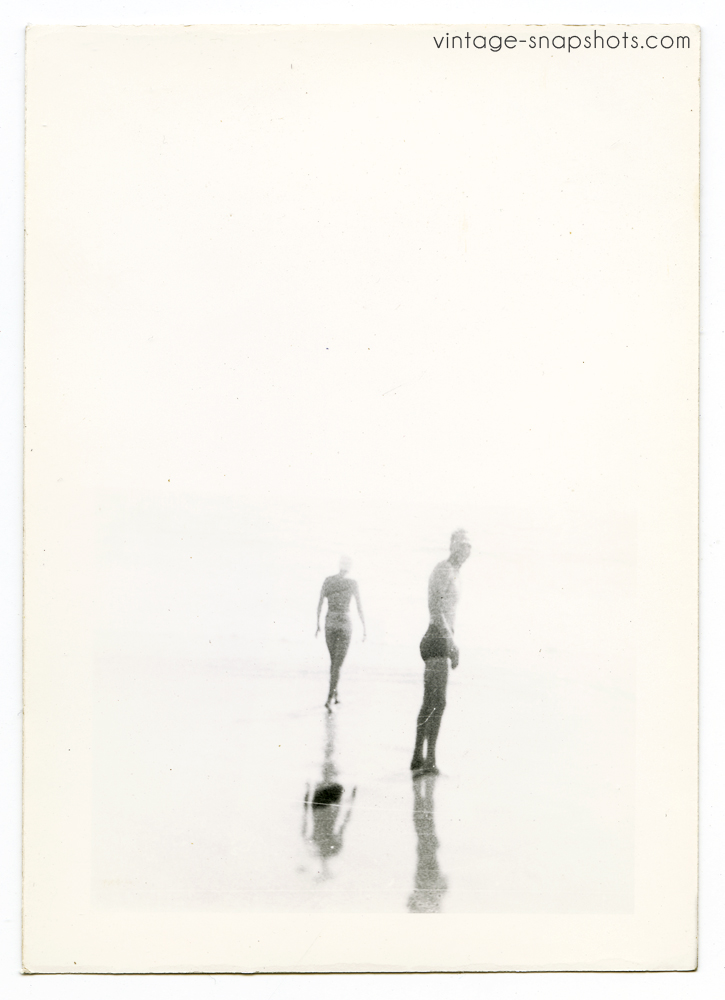
Beach reverie, 1944
This is labeled “Laguna ’44” on the back, for Laguna Beach, CA. Thanks to the keen-eyed Mike Conger for gifting this amazing shot — an estate sale find, I believe — to me yesterday.
Beach reverie, 1944
This is labeled “Laguna ’44” on the back, for Laguna Beach, CA. Thanks to the keen-eyed Mike Conger for gifting this amazing shot — an estate sale find, I believe — to me yesterday.

Caught unawares, or just uncooperative? (c. 1960s)

Cincinnati flood waters just short of their maximum height, January 1937
In what has been called the “worst natural disaster ever to strike Cincinnati–and the Ohio River Valley,” the Ohio River flooded (from about Pittsburgh to Cairo, Illinois) for ten days in 1937, causing a loss of almost 400 lives (though only one in Cincinnati itself) – as well as, in today’s dollars, $7.8 billion of property damage. Cincinnati.com published an absorbing article on the event in January of this year – the flood’s 75th anniversary. The piece recounts the local library’s request for photos of the disaster, and says that they expected about 200 photos, but ended up receiving more than 700.
“Families that weathered this disaster squirreled away images of the rampaging river, of houses upturned, of people waiting in line for hours for some safe water to drink. They preserved these memories in their mind’s eye and on film. Some could only save the mental images. Not everyone could afford a camera in the middle of the Great Depression. But, they could remember. And, as these stories have been passed down from generation to generation, they have not been forgotten.”

The inscription on the rear; the water would eventually reach 79.99 feet
Indeed, the article contains several eye-witness accounts from people still alive who retain vivid memories of the ice-cold water (it even snowed during the flood), months spent living elsewhere while homes and businesses dried out, and the fire that occurred on what is called “Black Sunday,” when gasoline storage tanks were knocked over by rushing water and a fire was ignited by a spark from a short circuit.
“Black, toxic smoke choked the air. Factories and houses in the beleaguered neighborhood burned to the water level. Telephone service and electricity stopped. The water works shut down. Natural gas lines were turned off. The city want dark, except for the flames burning into the night. More than 100,000 Greater Cincinnatians were homeless.”
As 79-year-old Lou Jacobs recalled, “It was miserable in Northside during the flood. The water was a filthy mix of oil and sewage and dead carcasses. It stunk. But that did not stop people from coming down to get their feet wet to take pictures.”
98-year-old Dan Henry lives in California and is another who remembers the flood – and may have had a better view of it than just about anybody. He was a pilot who took to the air to capture images for the Cincinnati Enquirer, and was shocked at the devastation he saw. He took the photo below of Crosley Field, the baseball stadium of the Reds at the time. The field had had sand placed on it before the waters came, and was rather amazingly ready for the start of the season a little over two months later.
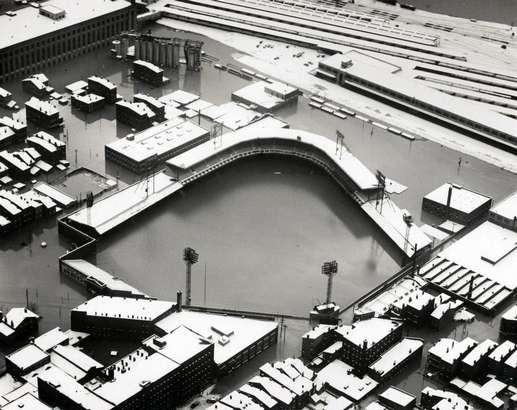
Crosley Field filled with water during the 1937 flood (Photo: Dan Henry)
Lou Jacobs remembered his parents returning to their clothing store some time after the waters receded. The shop would stay open for another fifty years, and “from time to time we tried painting the walls…But every time we did, the paint would peel off. Those walls got so wet in The Flood, they never dried.”
And in a reminder of how times have changed, Jacobs also recalls that drinking water was rationed for months afterwards, so he and other kids were sent down to the river each day to collect water in bottles to use to flush the toilet. “Nobody worried about us little kids being kidnapped…It was the Great Depression. People had too many kids of their own.”

Abstract interior scene, circa 1940s

Diver, circa 1905 (click to enlarge)
Vintage photos of people diving (or sometimes just jumping) into pools or lakes or other bodies of water are not all that uncommon, but the last post’s sort of poetic, distant view, and the one above, are a little more interesting than most, I think. Also note the person at right watching.
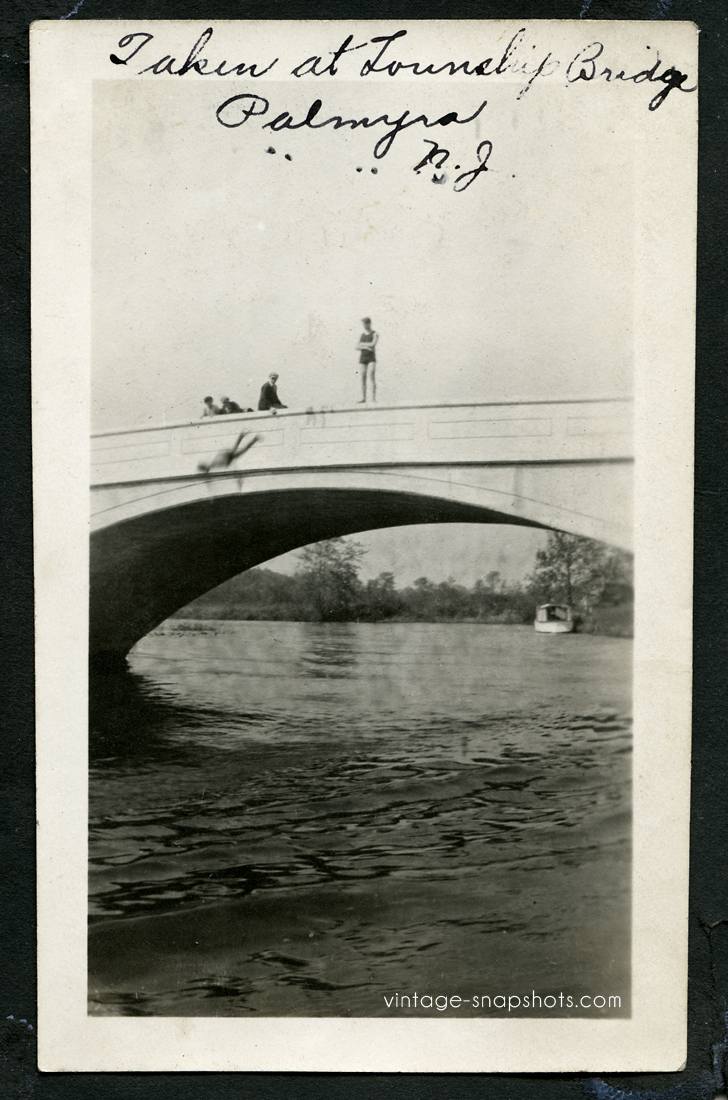
Township Bridge, Palmyra, New Jersey (circa 1918)

Brownie battle (c. 1920s)
The camera in at least the woman’s hand in this great shot looks to me to be a 1920s Kodak Brownie No. 3, Model B. According to what I have found online, the camera was produced from 1908 – 1934, but the trigger guard visible below her thumb was added to the Model B from 1920 – and the rest appears to match that particular camera, as shown below.

The way it used to work

Kodak’s Brownie No. 3, Model B

Quite a kid (circa 1940s)
Another in the “background” series, I love how this baby’s head seems both to be surrounded by a halo and to have a bottle sticking out of it. This was found in the Bay Area and was likely taken somewhere in San Francisco or the East Bay. I wonder if any trace of the sign remains. There is something appealing about the old signs that were hand-painted on buildings (as this was one was; you can see the lines of the siding running through it), and there are several websites devoted to ones that remain, sometimes called “ghost signs.”
Here is a link to a 2005 New York Times article on them, and some nice examples can be found on this flickr page, titled “Vanishing Beauty.”
Here is a close-up of Coke baby.
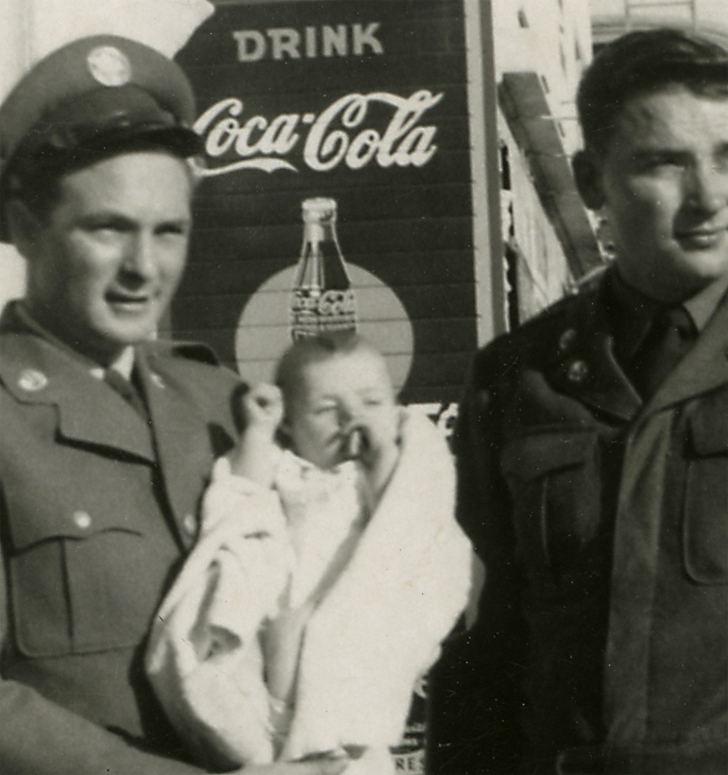
Drink Coca-Cola
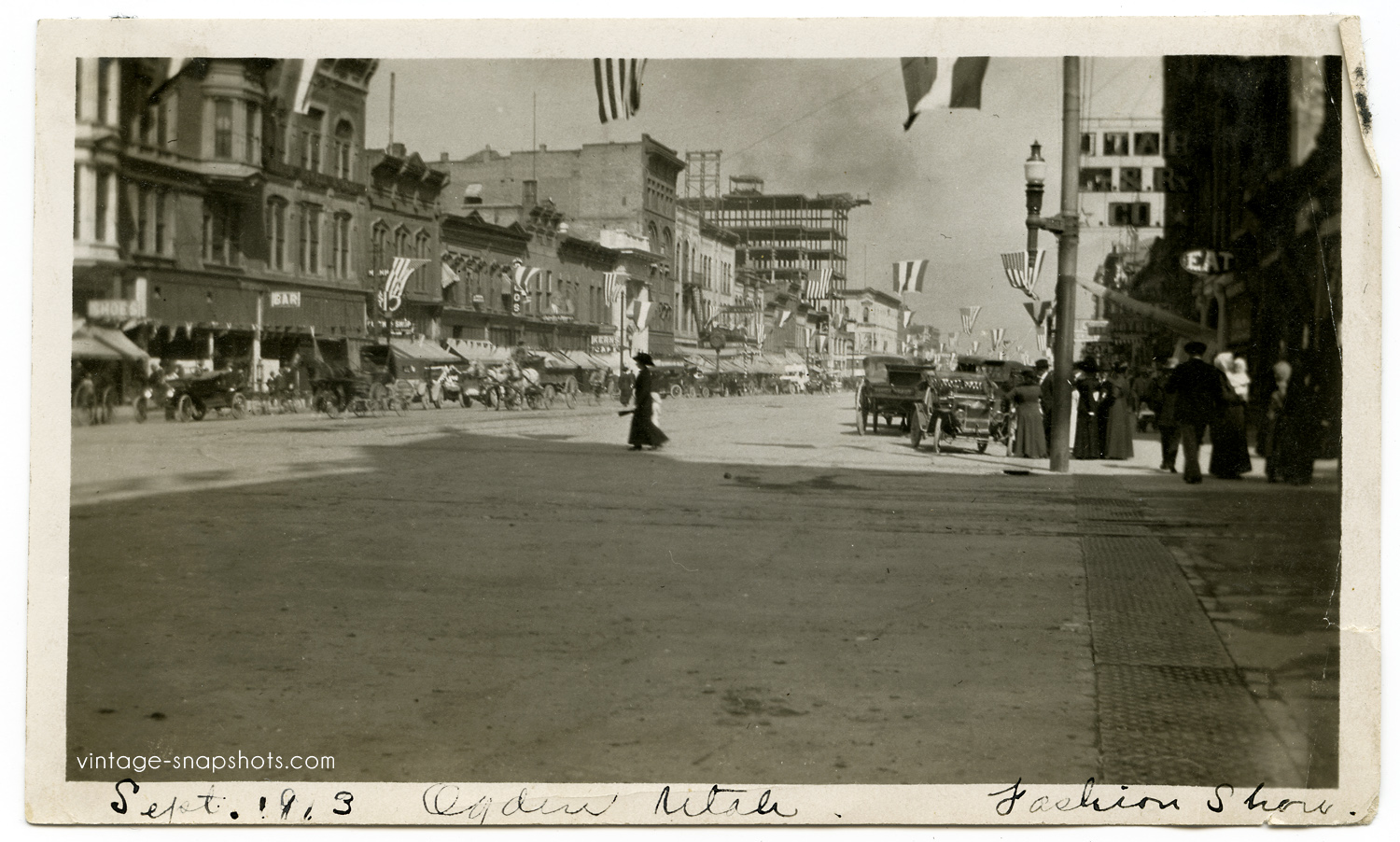
Making one’s way through downtown Ogden, Utah, 1913 (click to enlarge)
This photo is dated Sept. 1913 and is labeled “Fashion Show” at bottom right – and the streets do appear to have been decorated for an event. What I find intriguing, though – apart from the horse and buggy/automobile combination I talked about previously – are the signs you can just about make out. At far left there is a blurry one for “Shoes,” while the next door down is “Bar,” and across the street you find “Eat.” Nice and simple.
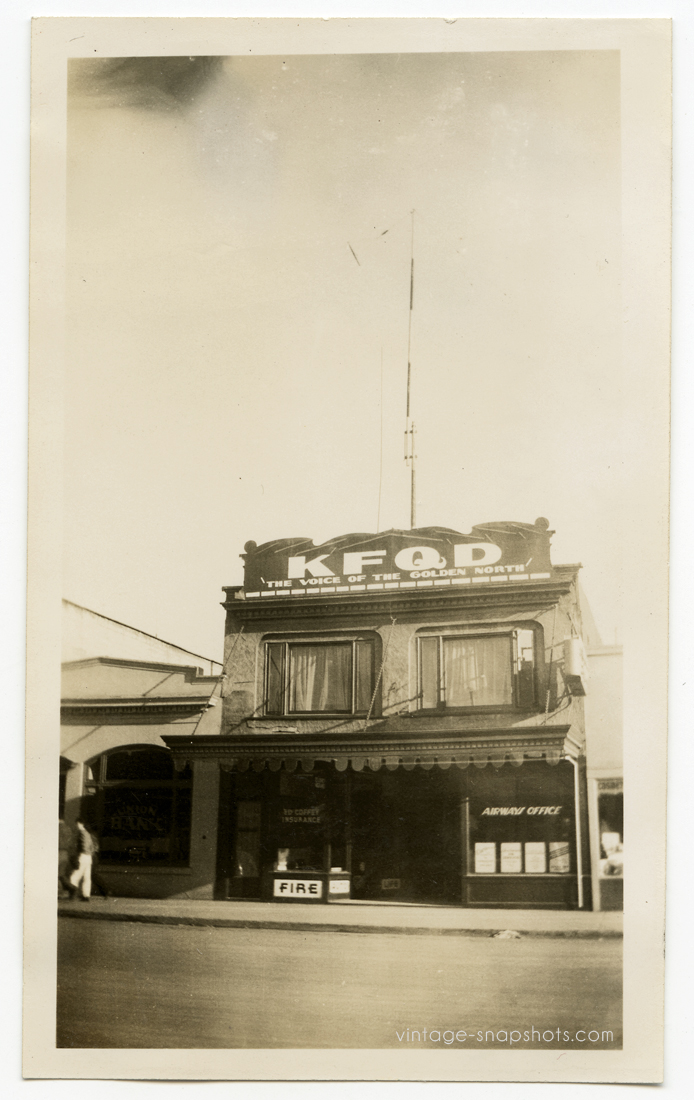
KFQD: “The Voice of the Golden North” (circa 1946)
This is a circa 1940s shot of the premises of KFQD Radio in Anchorage. KFQD still exists, and was, according to its website, the first radio station in Alaska, having begun broadcasting in 1924. Funnily enough, they actually have a similar photo on their “About Us” page, part of which I have reproduced below. In case you are dying to know, the window to the left sports a sign for Ed Coffey Insurance, and the one on the right says “Airways Office.”

A snowy day at KFQD, from the station’s website
 Vintage Snapshots