Merry Christmas
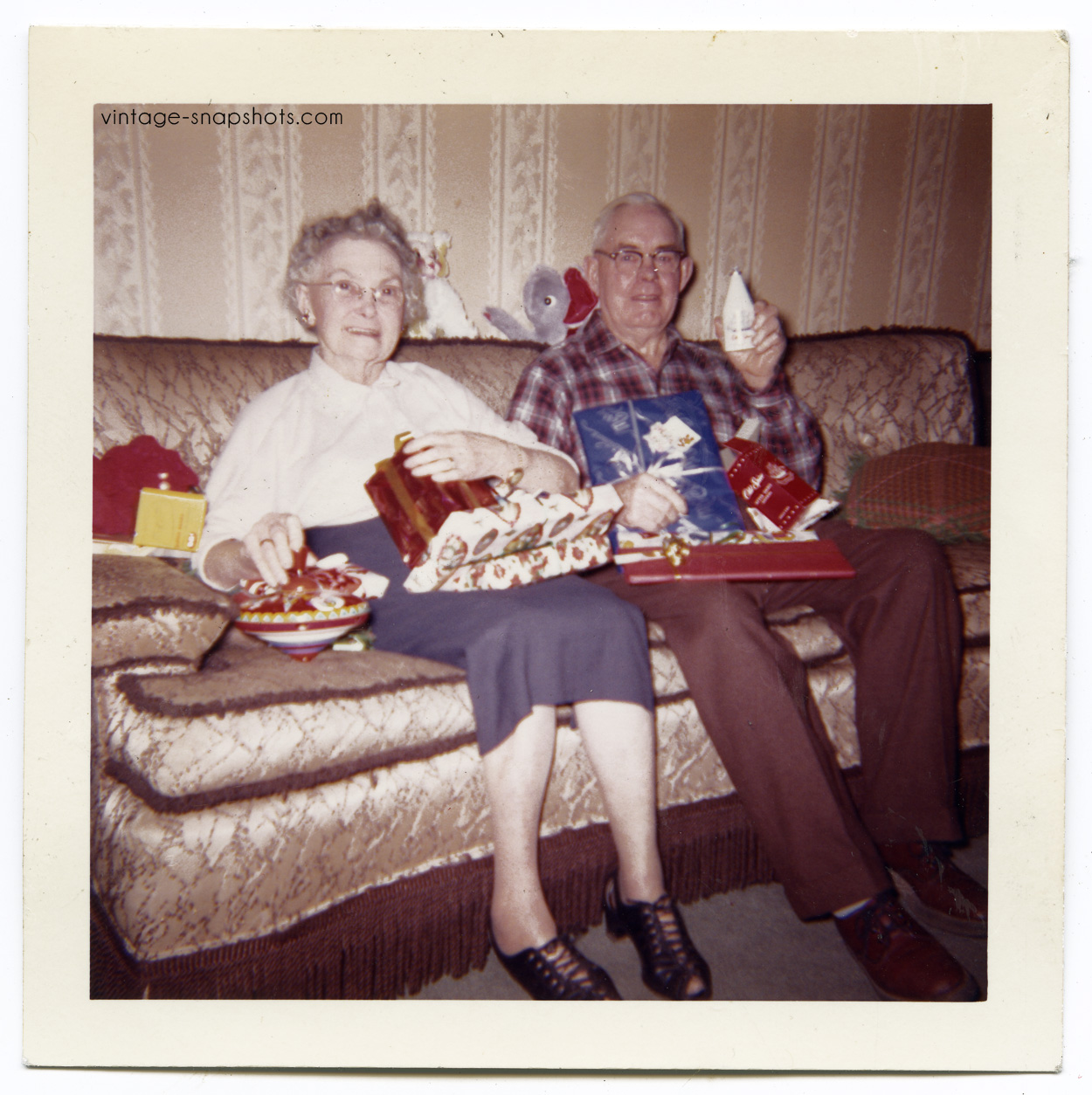
Old Spice at Christmas (c 1960s)
Christmas morning, covered with presents. Old Spice, taken out of the box to display. I love this one. Merry Christmas.
Old Spice at Christmas (c 1960s)
Christmas morning, covered with presents. Old Spice, taken out of the box to display. I love this one. Merry Christmas.

“Enjoyment – Mt. Wilson, Sept. 1, 1907” (click to enlarge)
Mt. Wilson is a 5,712′-high mountain in Los Angeles County, and seems to have been a very popular early-20th century destination for hikers if the number of vintage snapshots taken there is any indication. According to this website, the first modern trail up the mountain — transforming an old Indian path — was built in 1864, and by the 1880s “up to 70 hikers and horse-riders [would] climb the trail to camp at Mt. Wilson on weekends, building huge bonfires at the peak to signal their safe arrival.”
The names written on the back of this shot are “Davis” and what looks like “Goodan” — should anyone in the area have any inkling of who they perhaps were.

I wonder what they thought when they first saw this one (c 1940s)
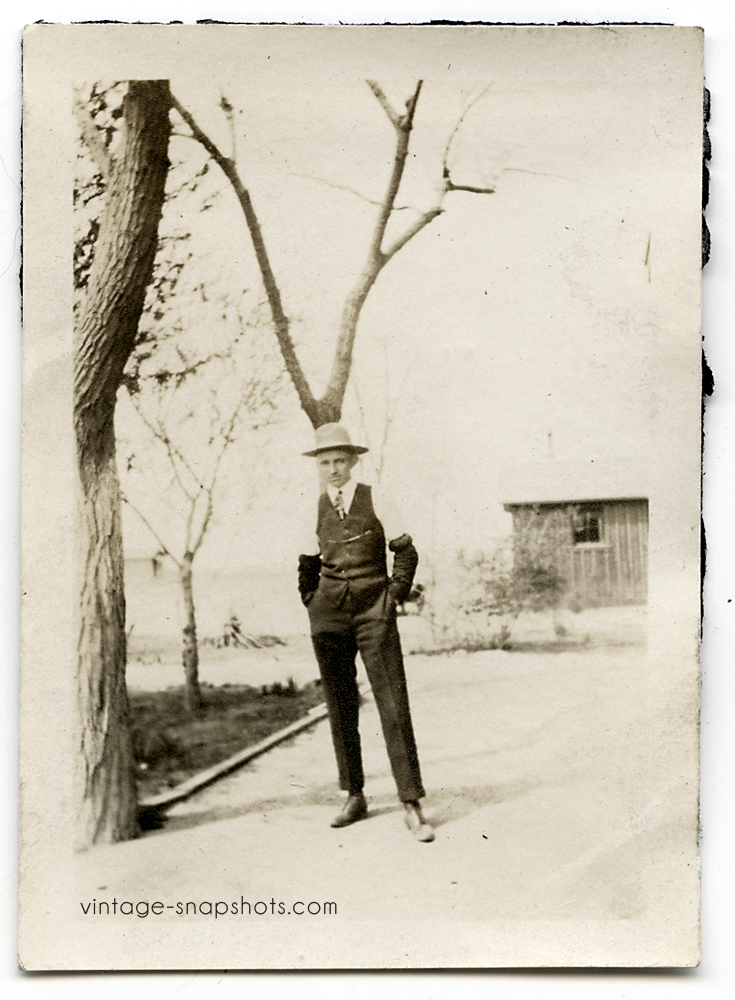
“Mantlers” (c 1920s)
Another in the “Backgrounds” series (sample here). While many of these of course seem inadvertent, I have to wonder whether they weren’t trying for this one.
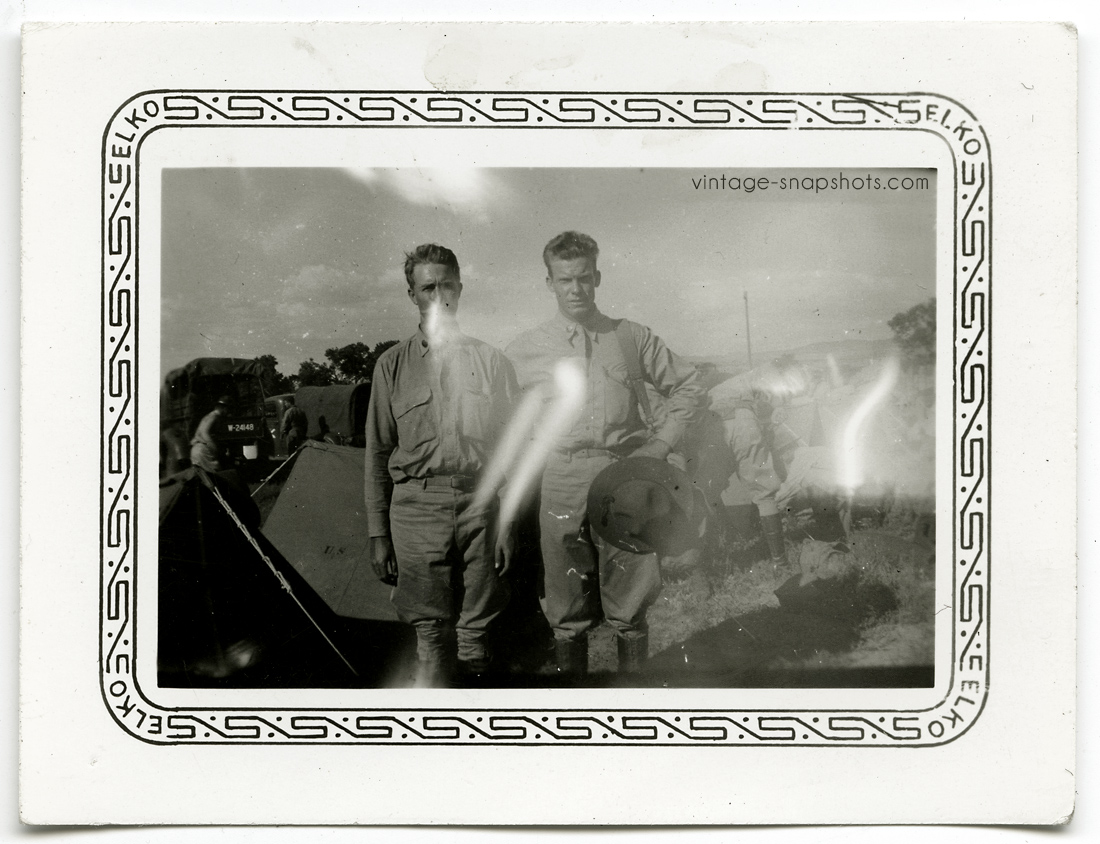
Circa 1940s (click to enlarge)

4-12-74 (click to enlarge)

Rumble seat + light leak, c 1930s (click to enlarge)
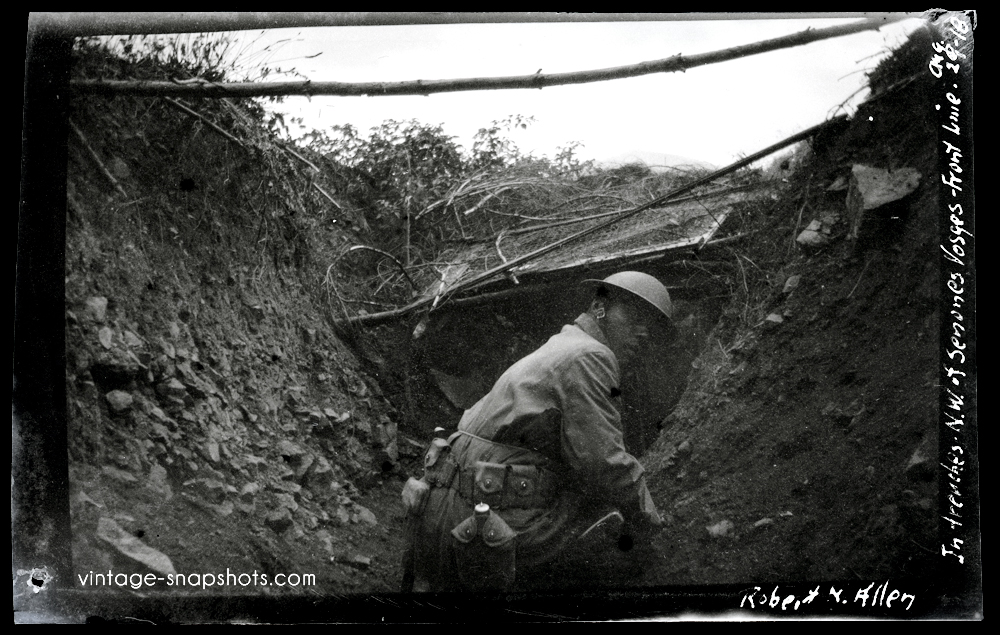
WWI American soldier in trench, Vosges, France 1918 (click to enlarge)
This is a negative recently found in the Los Angeles area, taken by an American engineering officer (his name, Robert Allen, is written on the negative at bottom right) who went to France in 1918 and returned to L.A. after the war. Something of a photographer as well as an engineer, many of his images are of WWI life behind the lines, including shots of downed airplanes, abandoned German tanks, his various living quarters, ruined buildings, French towns and people, etc. But several of them, like this, were taken on the front lines.
On the right side it reads: “In trenches, N.W. of Senones Vosges – Front Line – Aug. 29 – 18.”
One brief moment where the unnamed soldier turned for a quick photo, lost in an envelope in a box of papers, perhaps not seen since shortly after it was taken. But now, in a small way, not forgotten. And although Memorial Day is of course a commemoration of men and women who have died while serving in the United States Armed Forces, and I have no idea what happened to this man, so many were lost in and around trenches like this (estimates of Americans killed in the war – including, incidentally, a great uncle of mine – hover around 116,000, in the space of only a little over a year and a half of fighting) that I feel he can serve as a fitting subject for a day focused on remembering the sacrifices made by so many.
// //

Classic 1950s family, Laura Scudder’s chips, Sun Valley, CA, May, 1957 (click to enlarge)
I’m not sure exactly what the imposing controls were used for (I can’t make out the abbreviation on the back, though the date, city and name of the family — Schepler — are clear). I assume, in any case, that the boy was quite pleased with himself when he saw this.
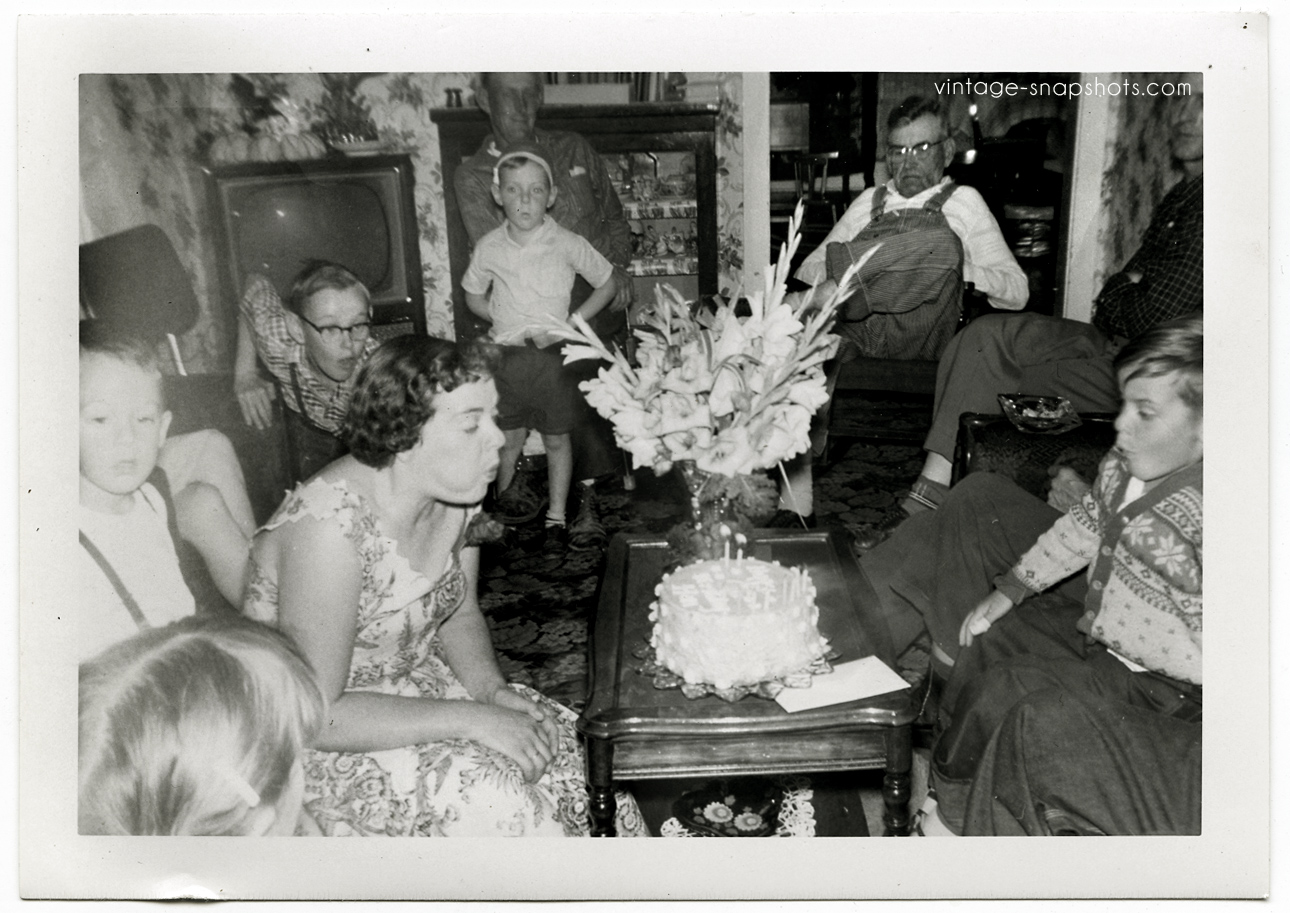
The excitement builds, c 1950s (click to enlarge)
There’s just so much to like here, but my favorite is the boy with the glasses towards the upper left.

Posing for a snapshot, c 1960s (click to enlarge)
 Vintage Snapshots