Wings

Circa 1920s
Circa 1920s
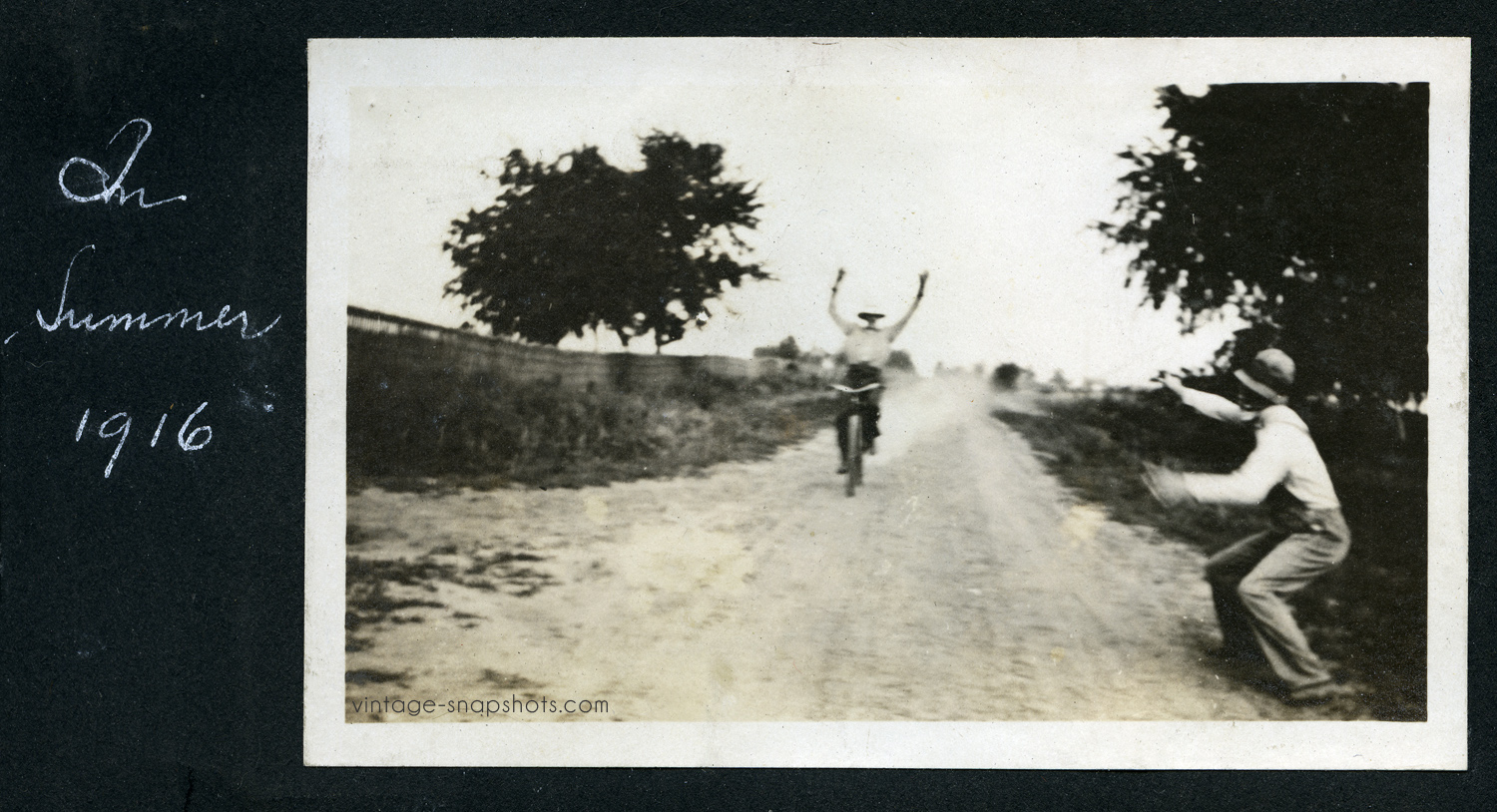
Looks like a winner (click to enlarge)
In honor of the 103rd Tour de France, which ended today. I just love this one.

Pete, circa 1910s/1920s (click to enlarge)
That looks like one nice dog. I would love to know more about him, but — unsurprisingly — can’t find any mention of him anywhere. He seems to have been regarded with affection in any case.

Across the street, c 1910s (click to enlarge)

Edith at the piano (detail), c 1910s/20s (click to enlarge)
Vintage snapshots of people sitting at pianos are not uncommon, though this is one of the nicer ones I think I have come across — for several reasons in my view, including its composition/light, the framed photographs on the piano, the fact that the woman is actually playing rather than merely sitting or posing, and for the sheet music to her left. (See the full photo below.)
“I Love the Ladies” first appeared in 1914, and was written by Grant Clarke and Jean Schwartz, the latter a Hungarian immigrant born in 1878 who was one of the more prolific composers of the early Broadway era. Those early popular songs certainly had some great titles; some of my favorites from Schwartz include “Rip Van Winkle Was a Lucky Man,” “Why Do They All Take the Night Boat to Albany?” and “I’m Tired.” For his part, the Akron, Ohio-born Clarke contributed to titles such as “Weary River,” “He’d Have To Get Under – Get Out And Get Under – To Fix Up His Automobile,” “There’s A Little Bit Of Bad In Every Good Little Girl,” and “I’m The Medicine Man For The Blues.”
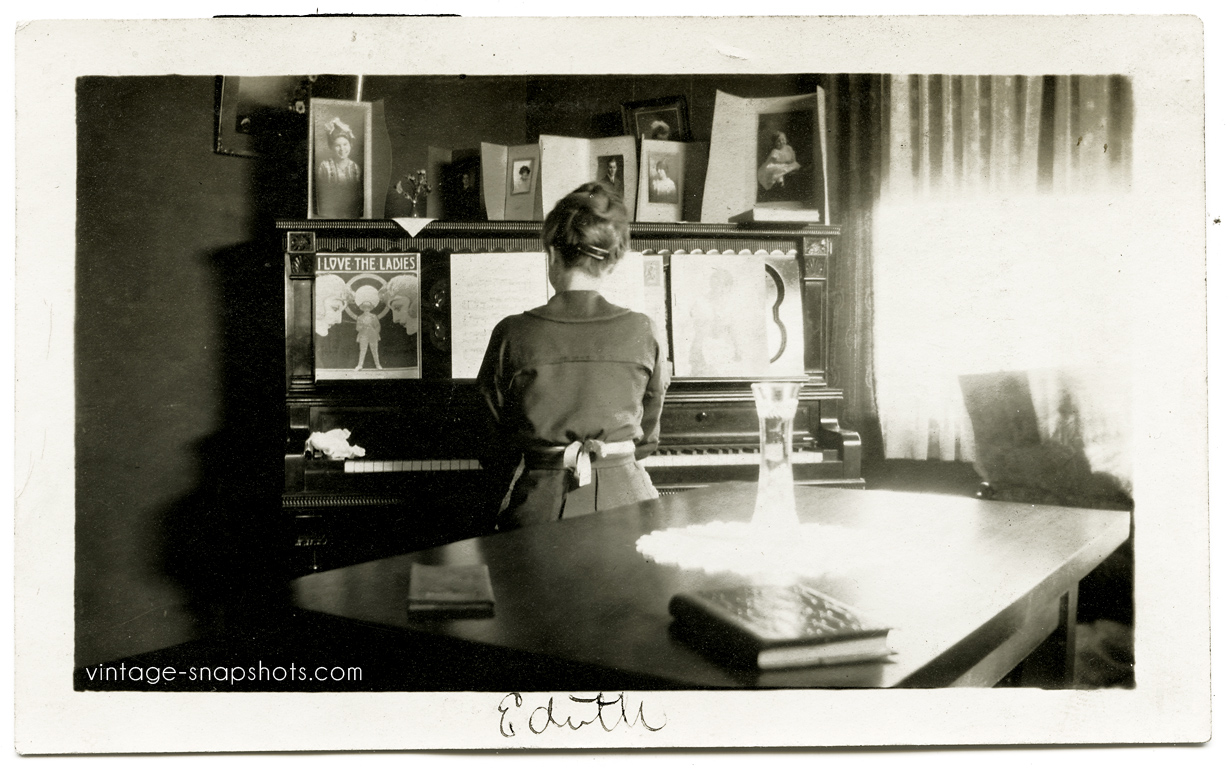
Edith, c 1910s/20s
Here is a link to the sheet music, and should anyone be interested in the place of the piano in early-20th century culture, I wrote a long piece that touches on that subject in connection with the jazz pianist George Shearing for another blog I do here.
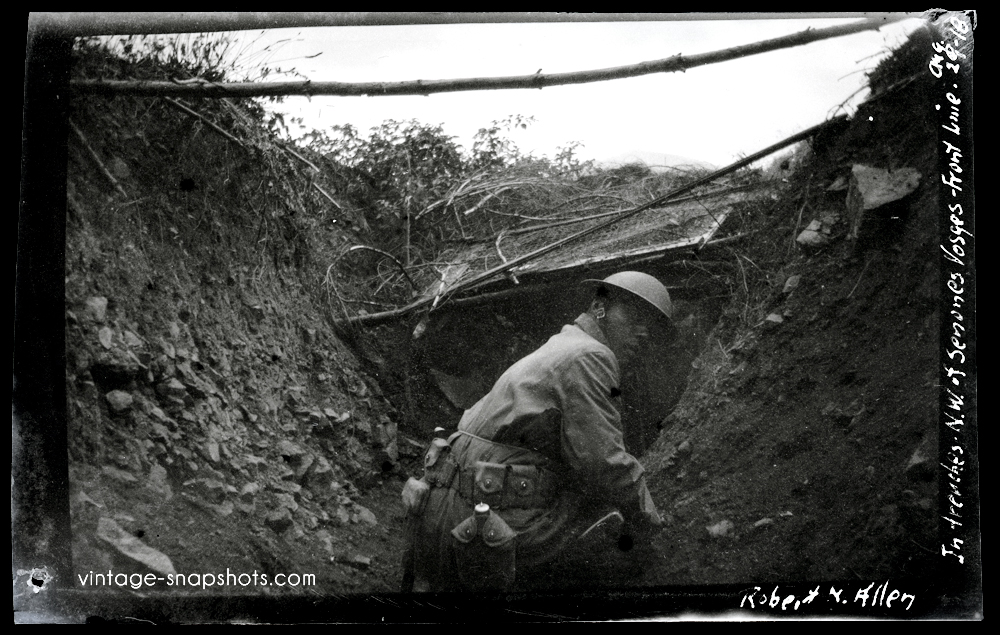
WWI American soldier in trench, Vosges, France 1918 (click to enlarge)
This is a negative recently found in the Los Angeles area, taken by an American engineering officer (his name, Robert Allen, is written on the negative at bottom right) who went to France in 1918 and returned to L.A. after the war. Something of a photographer as well as an engineer, many of his images are of WWI life behind the lines, including shots of downed airplanes, abandoned German tanks, his various living quarters, ruined buildings, French towns and people, etc. But several of them, like this, were taken on the front lines.
On the right side it reads: “In trenches, N.W. of Senones Vosges – Front Line – Aug. 29 – 18.”
One brief moment where the unnamed soldier turned for a quick photo, lost in an envelope in a box of papers, perhaps not seen since shortly after it was taken. But now, in a small way, not forgotten. And although Memorial Day is of course a commemoration of men and women who have died while serving in the United States Armed Forces, and I have no idea what happened to this man, so many were lost in and around trenches like this (estimates of Americans killed in the war – including, incidentally, a great uncle of mine – hover around 116,000, in the space of only a little over a year and a half of fighting) that I feel he can serve as a fitting subject for a day focused on remembering the sacrifices made by so many.
// //
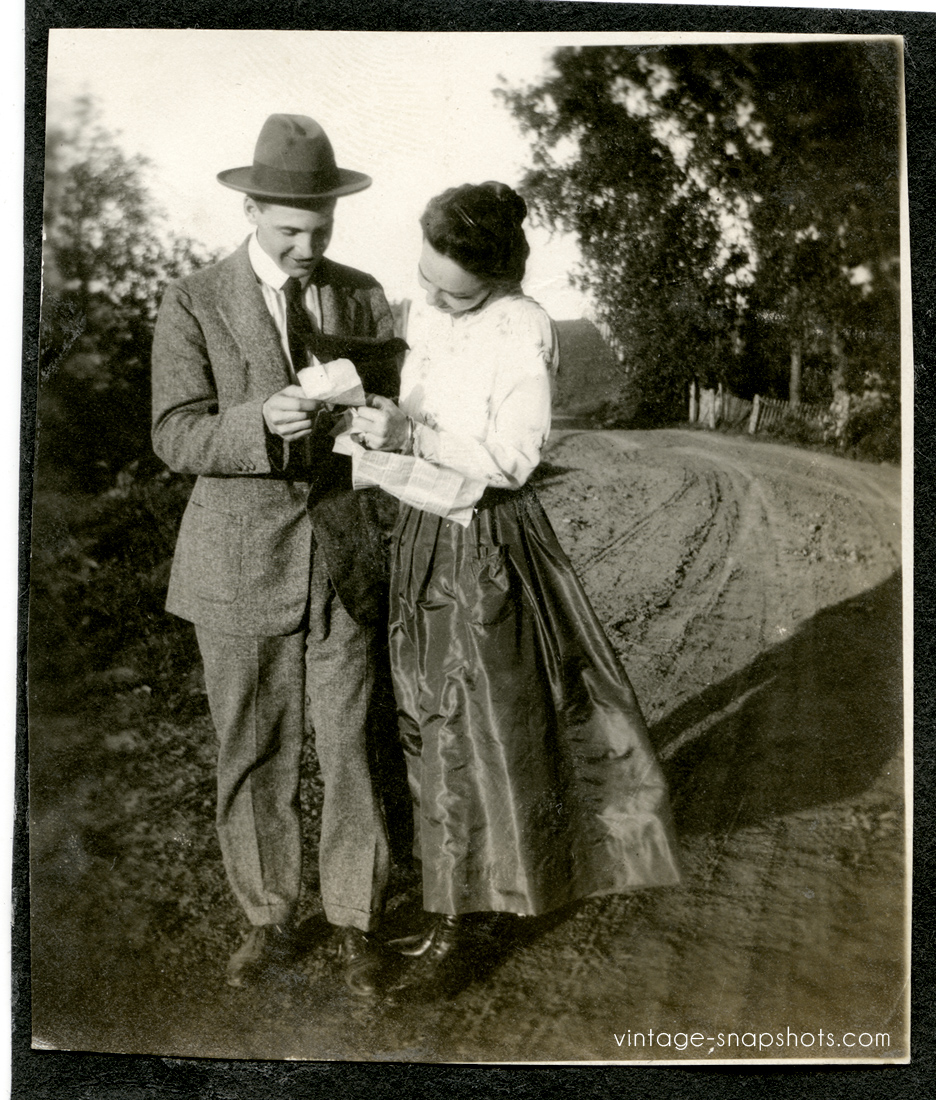
A letter? (circa 1911)
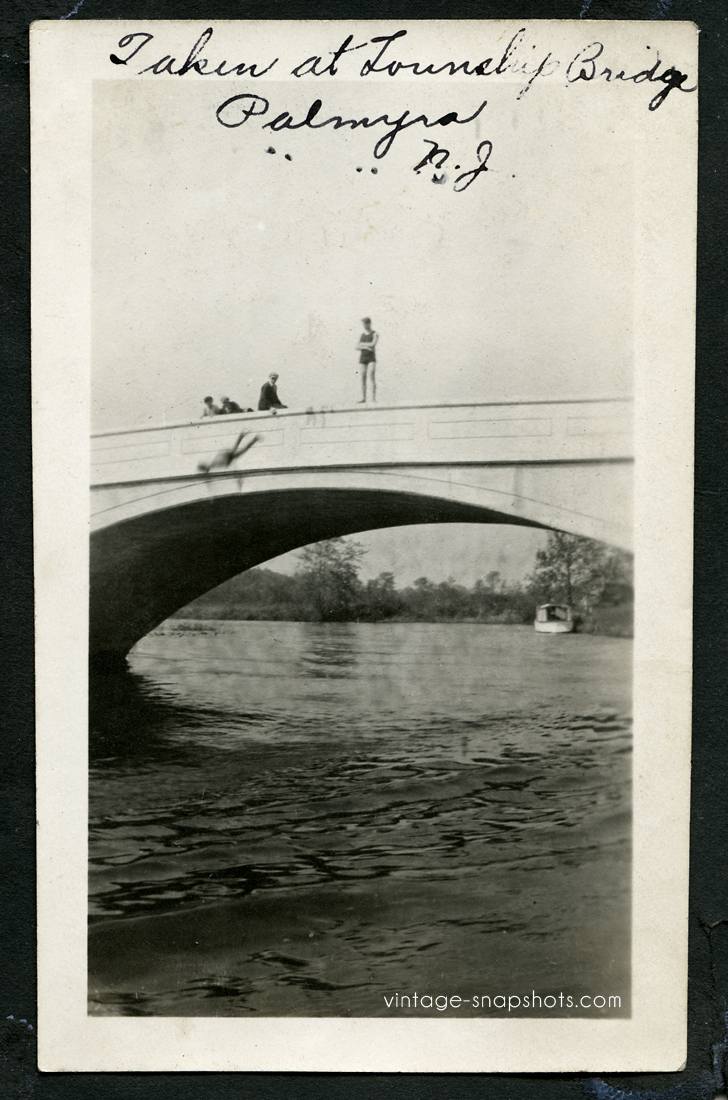
Township Bridge, Palmyra, New Jersey (circa 1918)
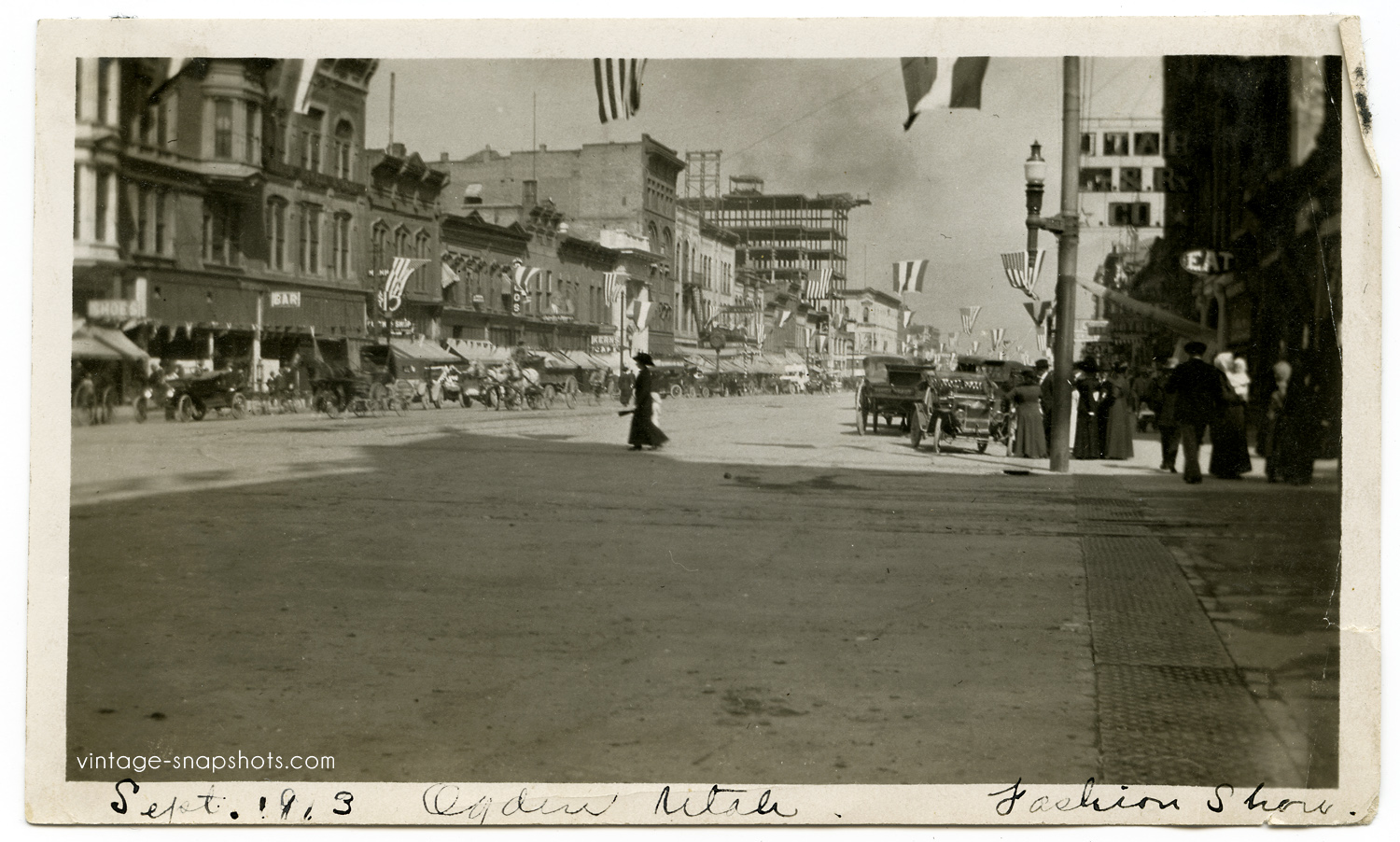
Making one’s way through downtown Ogden, Utah, 1913 (click to enlarge)
This photo is dated Sept. 1913 and is labeled “Fashion Show” at bottom right – and the streets do appear to have been decorated for an event. What I find intriguing, though – apart from the horse and buggy/automobile combination I talked about previously – are the signs you can just about make out. At far left there is a blurry one for “Shoes,” while the next door down is “Bar,” and across the street you find “Eat.” Nice and simple.
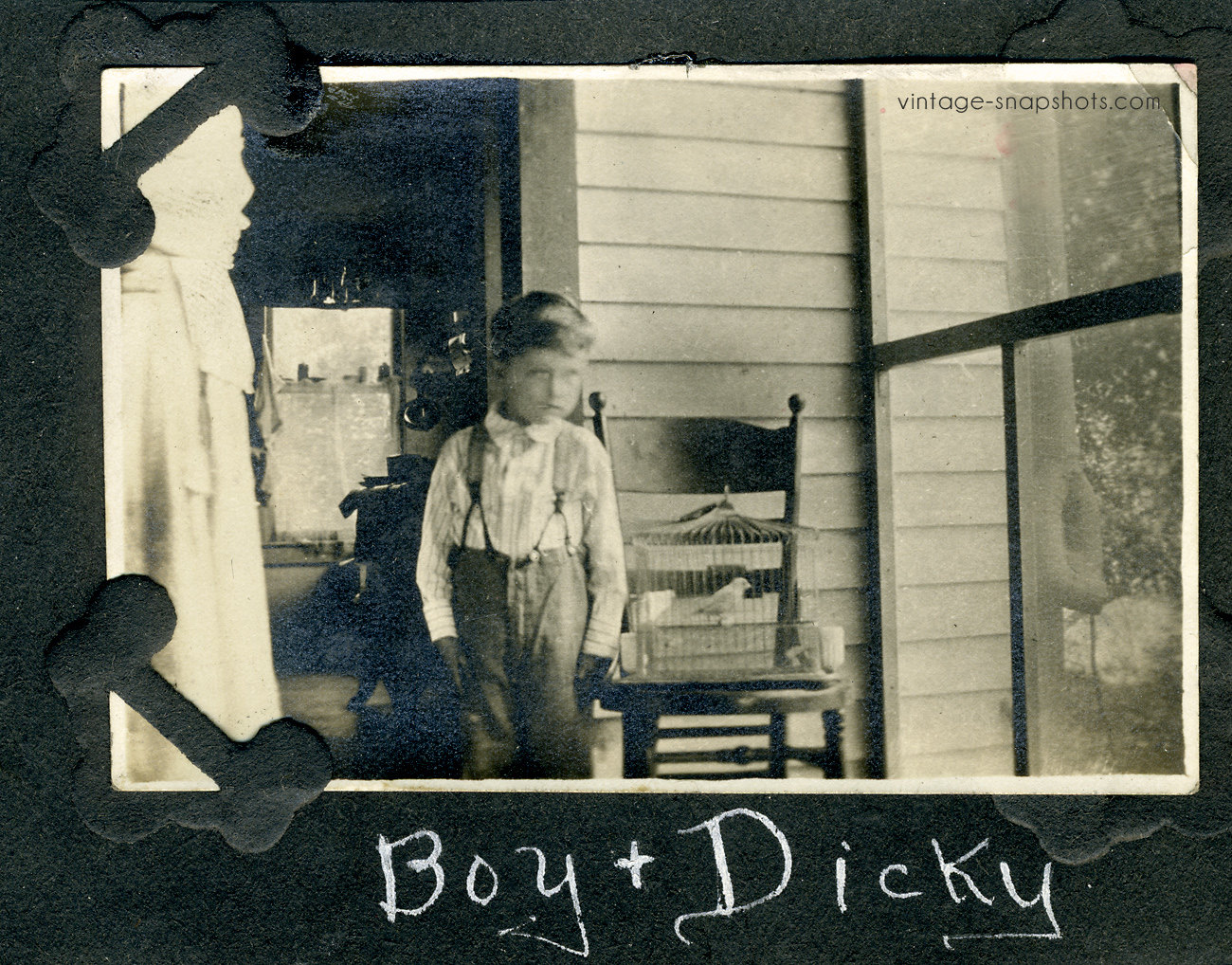
Unnamed boy with a bird named Dicky (1918)
A boy, a bird, and an open door – as well as, presumably, a mother overseeing things to the left. Oddly, in the many shots in which he appears in the photo album from which this was taken the youngster is always identified as “Boy,” while the little bird has a name.
 Vintage Snapshots